
Reviewed · COOKING CLASSES
Market Visit & Private Hands-on Cooking Class at Daun Senja
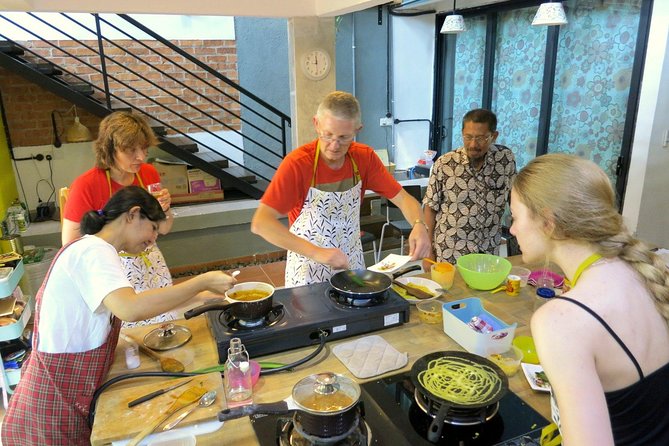
The best part of Daun Senja is that it begins before the cooking. Patricia and Kingston take you to a local wet market, where you see the ingredients in their everyday setting, then bring you into a home kitchen to prepare a full Malaysian meal together. It feels closer to spending a morning with a food-loving family than attending a formal demonstration.
I like the small private format, which gives you room to ask questions and work at your own pace. I also like the market breakfast, often an Indian meal such as roti or dosa, because it adds another layer to the food story. The main drawback is location: Taman Suntex is outside central Kuala Lumpur, so you should allow time and budget for a Grab ride.
In This Review
- What makes this Kuala Lumpur cooking class special
- A morning beyond Kuala Lumpur’s tourist center
- Starting at the wet market
- Choosing one of three Malaysian menus
- Cooking beside Patricia and Kingston
- Sitting down to eat your three-course meal
- What $130 buys you
- Who should book this experience?
- My verdict on Daun Senja Kitchen
- FAQ
- Where does the cooking class begin?
- What time does the activity start?
- How long does the experience last?
- Does the activity return to the meeting point?
- Is the market open every day?
- What dishes can I learn to cook?
- How many people can join the private class?
- Is food included after the cooking lesson?
- What is the cancellation policy?
What makes this Kuala Lumpur cooking class special
- A market visit comes first: You learn about Malaysian ingredients before they reach the chopping board.
- Patricia and Kingston teach your group privately: The class is limited to five people, so the lesson can stay practical and personal.
- Breakfast is part of the morning: On market days, you stop at a food stall for a local breakfast.
- Three menu choices offer different flavors: You may cook chicken pong teh, nasi lemak, chicken curry, or other Malaysian favorites.
- You eat the meal you prepare: The class ends with a three-course meal and a glass of wine or beer.
- Monday has a different plan: The wet market is closed, so the morning begins with breakfast at a small local restaurant instead.
A morning beyond Kuala Lumpur’s tourist center
Daun Senja Kitchen meets you at 8:00 a.m. in Taman Suntex, in Cheras, Selangor. This is not a central Kuala Lumpur hotel pickup or a class in a polished downtown studio. That is part of the appeal, but it also shapes the practical side of the experience.
The journey takes you away from the usual city sights and into a calmer residential area. One detailed account put the trip from central Kuala Lumpur at roughly 20 to 30 minutes by Grab, though traffic can affect that. I would leave extra time, especially for an 8:00 a.m. start.
The activity lasts about four and a half hours and returns to the meeting point. Since it is private, you do not have to adjust your pace to a large class. A couple can ask for extra explanation, a family can involve children, and experienced cooks can focus on technique rather than basic kitchen instructions.
The private format is especially useful here because Malaysian cooking often depends on small judgments: how a paste should smell before you add liquid, how soft an onion should be, or how a sauce should look when it is ready. A large demonstration may show you the finished dish. This class gives you a better chance to understand the steps in between.
More cooking classes in Kuala Lumpur:
- LaZat Malaysian Cooking Class
★ 5.0 · 87 reviews - Malaysia Cooking Classes With Local
★ 5.0 · 87 reviews - New Malaysian Kitchen Cooking Class and Garden Tour
★ 5.0 · 54 reviews
Starting at the wet market
On days other than Monday, the morning begins at a local wet market. The market visit is not just a shopping stop before the real activity. It gives you a look at how ingredients are selected and used in ordinary Malaysian cooking.
You can expect to see the products needed for the day’s dishes and learn about local ingredients from Patricia and Kingston. The useful part is the connection between market stall and kitchen. Instead of hearing a list of unfamiliar ingredients in the abstract, you see what they look like before preparation.
This is also where the class gains its cultural value. Malaysian cooking reflects Malay, Chinese, Indian, and Peranakan influences, and the menu gives you a small but tasty window into that mix. The breakfast stop adds another piece. Past morning groups have eaten at a market stall, often trying Indian dishes such as roti and dosa.
Breakfast is worth treating as part of the experience, not just a quick snack. It gives you a chance to try something outside the formal three-course menu and to see how local food is eaten at the start of the day. You may also find that breakfast is the easiest time to ask Patricia and Kingston about ingredients, customs, and the dishes you will cook later.
The market is closed on Mondays. If your date falls on a Monday, you still receive breakfast, but it takes place at a small local restaurant instead. This is a useful detail to know before booking. The Monday version is not the same market experience, though it preserves the food-focused start to the morning.
Choosing one of three Malaysian menus
The cooking lesson offers three menu paths. The exact choice should be confirmed when you arrange the experience, but the options cover several different sides of Malaysian home cooking.
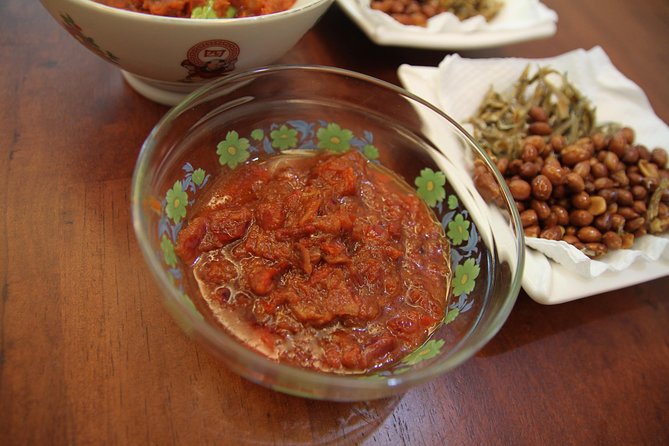
Option 1 includes chicken pong teh served with rice, eggplant sambal, and pulut inti. Chicken pong teh is a slow-cooked dish with a savory, sweet character, while sambal brings heat and depth to the eggplant. Pulut inti adds a sweet finish built around glutinous rice.
This menu is a good pick if you want a hearty main course and a strong introduction to sambal. It also gives you a nice contrast between savory food and a traditional sweet.
Option 2 includes nasi lemak, pineapple and cucumber salad, and sago gula Melaka pudding. Nasi lemak is one of Malaysia’s best-known dishes, built around fragrant coconut rice and the accompaniments that make it a complete meal.
The pineapple and cucumber salad supplies a fresh counterpoint, while sago gula Melaka pudding brings palm sugar flavor to dessert. I would choose this menu if you want the dish most closely associated with Malaysian national food culture.
Option 3 includes chicken curry, roti jala, and ondeh ondeh. Roti jala is a lacy Malaysian crepe, usually made by drizzling batter into a pan in a web-like pattern. It is an appealing hands-on dish because the technique matters as much as the ingredients.
Ondeh ondeh are small sweet treats with a surprise center of palm sugar. This menu suits you if you want a curry and a more playful cooking session. It also offers a chance to make something that you are less likely to order by accident in a standard restaurant.
The menus are not designed as a restaurant tasting flight. You select one route and prepare the dishes with guidance. That means the class is more useful for learning than for sampling every Malaysian specialty in one morning.
Cooking beside Patricia and Kingston
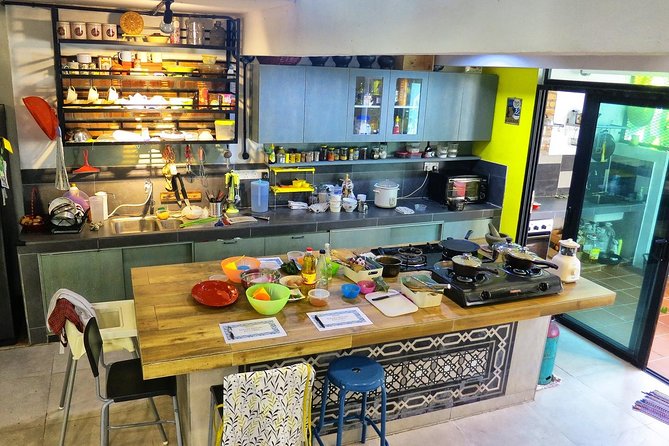
The lesson takes place in Patricia’s home, with Kingston helping host and teach. The strongest feature is the way the instruction stays hands-on. You are not simply watching someone cook while a staff member passes around samples.
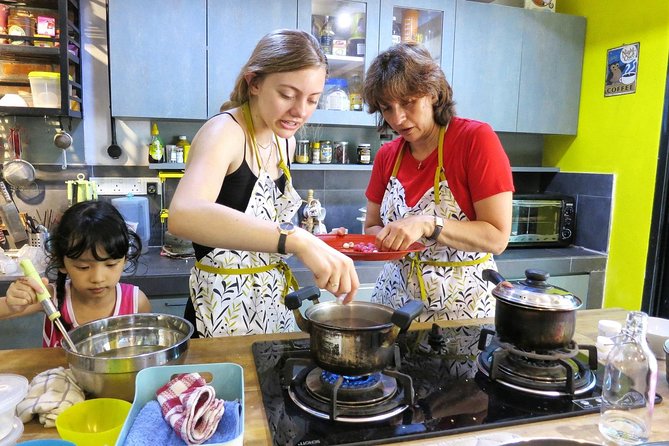
You can ask questions as you go and see how each ingredient affects the final dish. Patricia’s calm, patient teaching style is a good match for beginners, but the private arrangement also works for people who already cook and want to understand Malaysian methods.
The family welcome is part of the experience. Patricia’s two young daughters may also be around, and families with small children have found the setting accommodating. One family even had a two-year-old present while the adults took the class. That does not mean the activity is structured as childcare, but the home setting is less rigid than a restaurant kitchen.
I would still be realistic about the format. This is a home cooking class, not a professional culinary school. If you want exact knife-skills training, restaurant plating, or a long technical lecture on regional food, this may feel informal. If you want to cook side by side, ask questions, and understand food in a friendly setting, the informality is a strength.
The recipes also appear practical for home cooks outside Malaysia. Several dishes use ingredients that can be found beyond the country, which gives you a fair chance of making them again after your trip. That matters more than a class built around hard-to-source items that remain a holiday memory.
More market walks around Kuala Lumpur:
- Private Kuala Lumpur Night Market And Food Tour
★ 5.0 · 13 reviews - Kuala Lumpur: Street Market Exploration & Shopping Tour
★ 4.9 · 12 reviews - Private Tour: Half-Day Shopping and Market Exploration in Kuala Lumpur
★ 4.0 · 11 reviews - Kuala Lumpur: Malaysian Cooking Class with Market Tour
★ 5.0 · 11 reviews
Sitting down to eat your three-course meal
After the cooking, you sit down to eat the meal you prepared. The three-course format gives the morning a clear payoff, and you can judge the dishes while the methods are still fresh in your mind.
A glass of wine or beer is included with the meal. The drink is a small detail, but it helps turn the final stage into a relaxed shared lunch rather than a quick taste at a workbench.
The meal also lets you compare your result with the version you may have tried in Malaysian restaurants. Some dishes, particularly home-style recipes, can taste different from the food served in commercial kitchens. The class is valuable because you learn what produces that difference: the balance of sweet, salty, spicy, and sour flavors, along with the texture of rice, sauces, and vegetables.
You should arrive ready to eat breakfast and lunch. The market meal comes early, then the cooking and final meal take up much of the morning. If you have a very light appetite in the morning, keep breakfast modest, but do not skip it entirely. The market or restaurant stop is part of the experience.
What $130 buys you
The listed price is $130 for an experience that includes about four and a half hours, a market or breakfast visit, private instruction, ingredients for a three-course meal, the meal itself, and one glass of wine or beer.
The value depends on how the price is applied at booking. For a full party of five, $130 would work out to $26 per person if it is a total group price, which would be strong value. If the price is charged per participant, you are paying for privacy and personal attention rather than simply for food.
That privacy is the key comparison. A cheaper group class may give you a demonstration and a shared table. Daun Senja gives your party the kitchen time, direct access to the hosts, and freedom to ask about ingredients or techniques that interest you.
You are also paying for more than a recipe. The market, breakfast, home setting, and conversation make this a cultural morning as well as a cooking lesson. If you only want to prepare one dish at the lowest possible cost, this is probably not the right choice. If you want food, local contact, and a meal in one activity, the price is easier to justify.
Who should book this experience?
I would recommend Daun Senja most strongly to couples, families, and small groups who want a personal morning. It suits first-time cooks because Patricia and Kingston provide step-by-step help. It also suits experienced cooks who enjoy learning how another household builds flavor.
Families should find the private setting easier than a large public class. Children can be part of the morning, though adults remain responsible for them. The hosts’ warm family atmosphere is one of the experience’s defining features.
Food-focused visitors will get the most from the market and breakfast. You should book it if you want to understand Malaysian food beyond dishes on a restaurant menu. The activity is less suited to anyone who wants a central-city location, a late start, or a very formal culinary lesson.
People with limited time in Kuala Lumpur should also think about the meeting point. The class does not begin in the middle of the usual sightseeing zone, and you need to arrange your own way to Taman Suntex. The upside is that you see a quieter side of the wider Kuala Lumpur area.
Confirmation is sent within 48 hours, subject to availability. Mobile tickets are available, group discounts are offered, and service animals are allowed. Free cancellation applies if you cancel at least 24 hours before the start time. Changes or cancellations inside that window are not accepted for a refund.
My verdict on Daun Senja Kitchen
Book this class if you want to cook Malaysian food with real guidance and spend time with a local family. The market visit, Indian breakfast, private kitchen, and shared meal give you a fuller morning than a class that begins and ends at a cooking bench.
I especially like it for anyone who plans to repeat the recipes at home. The best souvenir here is not a spice packet. It is knowing how to make nasi lemak, chicken pong teh, roti jala, or the accompanying sweets yourself.
Skip it if you need a downtown activity or prefer a polished, large-scale cooking school. Otherwise, the combination of personal instruction, local food shopping, and a home-cooked meal makes Daun Senja a strong use of a Kuala Lumpur morning.
FAQ
Where does the cooking class begin?
The meeting point is in Taman Suntex, 43200 Cheras, Selangor, Malaysia.
What time does the activity start?
The activity starts at 8:00 a.m.
How long does the experience last?
The experience lasts approximately four hours and 30 minutes.
Does the activity return to the meeting point?
Yes. The activity ends back at the meeting point.
Is the market open every day?
The wet market visit is available except on Mondays. On Mondays, the morning begins with breakfast at a small local restaurant instead.
What dishes can I learn to cook?
The menu options include chicken pong teh, eggplant sambal, pulut inti, nasi lemak, pineapple and cucumber salad, sago gula Melaka pudding, chicken curry, roti jala, and ondeh ondeh.
How many people can join the private class?
The private activity is for your group only, with up to five participants.
Is food included after the cooking lesson?
Yes. You enjoy a three-course meal after the lesson, with a glass of wine or beer.
What is the cancellation policy?
You can cancel at least 24 hours before the start time for a full refund. Cancellations and changes made less than 24 hours before the start time are not accepted for a refund.
More Workshops in Kuala Lumpur
- Batu Caves and Sari Experience with Batik Workshop
★ 5.0 · 181 reviews - Batik Coloring Workshop by myBatik
★ 5.0 · 48 reviews - Batik Bag Painting Workshop by myBatik
★ 5.0 · 35 reviews - Malaysian Hands-On Cooking Class : Masala Medley
★ 5.0 · 24 reviews
More Shopping Tours in Kuala Lumpur
- Traditional Malaysian Cooking Class with Market Tour
★ 4.0 · 5 reviews - Private Tour : “Lepak-Lepak” at Local Night Market & Mamak Stall
★ 4.5 · 4 reviews - Private Night Tour: Petronas Twin Tower And Shopping
★ 5.0 · 3 reviews
More tours in Kuala Lumpur we've reviewed
- Batu Caves & Putrajaya Highlights: Landmarks & Botanical Garden★ 4.5 · 3 reviews
- AVANI Sepang Goldcoast Resort Hotel TO Kuala Lumpur Hotel Door to Door Transfer★ 4.5 · 3 reviews
- KL Cruise Excursions from Port Klang for KL City Tour★ 4.5 · 3 reviews
- Fireflies & Silver Leaf monkey Tour With Free Batu Caves Temple★ 5.0 · 3 reviews
- Private Kuala Lumpur City Tour with KL Tower & Batu Caves★ 5.0 · 3 reviews
- Private Batu Caves & Petronas Twin Tower Tickets With Lunch *26*★ 5.0 · 3 reviews
- Exclusive Malacca Private Tour★ 5.0 · 3 reviews
- Fireflies and Kuala Selangor Tour Including Dinner★ 3.5 · 3 reviews
Cooking Classes, compared.

New Malaysian Kitchen Cooking Class and Garden Tour
Read our review →
Malaysian Hands-On Cooking Class : Masala Medley
Read our review →
Traditional Malaysian Cooking Class with Market Tour
Read our review →Browse the lists this tour appears in