
Reviewed · KUALA LUMPUR
Culinary Journey Through Chinatown with All Type of Delicacies
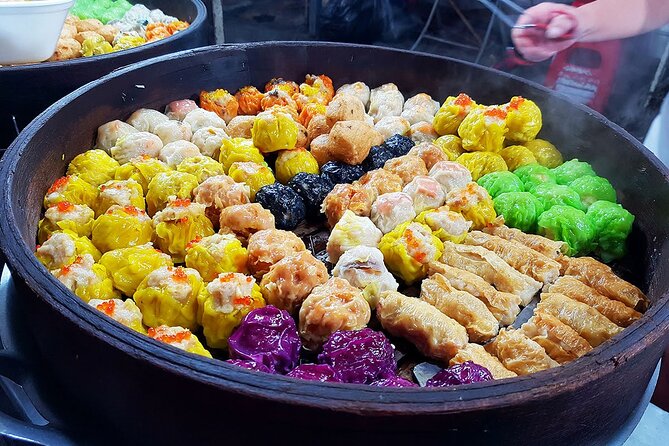
Kuala Lumpur’s best food lesson may be served one small plate at a time. This three-hour walk starts at Central Market and threads through Petaling Street and Chinatown, combining Chinese barbecue, Indian Muslim cooking, and Malay-style sweets in one compact evening.
I like the broad mix of food and the guide-led explanations. You do not just eat one regional cuisine, you see how Chinese, Indian Muslim, and Malaysian traditions share the same streets. I also like the manageable pace, with about 2 to 3 kilometers of walking and a maximum of 15 people.
The main drawback is the price: $104.80 per person is a serious spend for a three-hour food walk, especially if you eat well on your own in Kuala Lumpur. The value depends on how much you want context, guidance, and a planned tasting route rather than just a cheap meal.
In This Review
- Key details of the Chinatown food walk
- Starting at Central Market at 4:00 pm
- Petaling Street gives the food a setting
- Bakkwa brings Malaysian Chinese flavor first
- Apam balik combines a soft center with crisp edges
- Soybean drink and tropical fruit provide a reset
- Teh tarik and roti canai show Indian Muslim Kuala Lumpur
- Hokkien mee closes the route with something savory
- What the $104.80 price really covers
- Group size, dietary needs, and walking comfort
- Who will get the most from this experience
- How to prepare for the best food walk
- Should you book this Chinatown food tour?
- FAQ
- Where does the Chinatown food tour start?
- What time does the tour begin?
- How long does the experience last?
- How much walking is involved?
- What food and drinks are included?
- Are vegetarian and halal options available?
- Is hotel transportation included?
- Can I cancel for a refund?
Key details of the Chinatown food walk
- Start at Central Market at 4:00 pm: Meet at the information counter near the entrance, then walk toward Petaling Street.
- Taste across three food traditions: The route includes Chinese bakkwa and Hokkien mee, Indian Muslim teh tarik and roti canai, plus Malaysian apam balik and tofu fa.
- Expect a proper tasting meal: Food, drinks, dessert tastings, and bottled water are included, so arrive hungry.
- Walk about 2 to 3 kilometers: The route includes stops where you can pause, eat, and listen rather than march from stall to stall.
- Small-group format: The maximum is 15 people, with more room for questions and personal attention than on a large coach-style outing.
- Tell the host about dietary needs early: Halal and vegetarian options are available, but allergies and special diets should be noted when booking.
Starting at Central Market at 4:00 pm
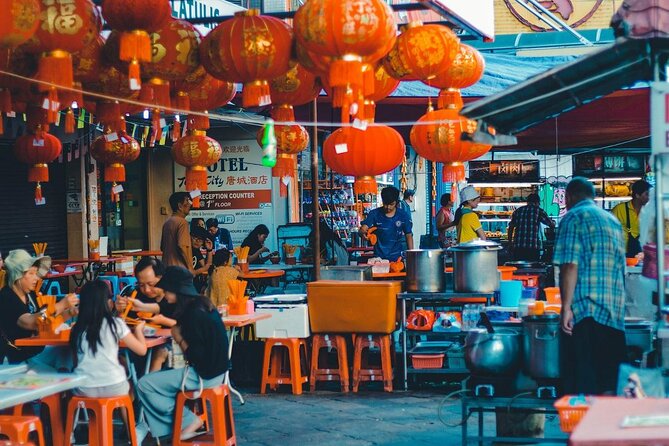
Central Market is a sensible meeting point for this food walk. It is near public transport, easy to identify, and close to Petaling Street, so you are quickly into the Chinatown area instead of spending much of the tour getting there.
Meet near the Central Market information counter at the entrance. Hotel pickup is not included, so you must arrange your own taxi or Grab and ask to be dropped at Central Market Kuala Lumpur.
The 4:00 pm start suits anyone who wants to keep the morning free for museums, shopping, or a trip outside the city. It also places the food walk into the late afternoon and evening, when a snack-heavy route makes more sense than it would first thing in the morning.
Your English-speaking local host begins with introductions and an overview of the area. Rayhan Raj Naidu is one named host associated with this experience, and the strongest personal praise centers on his friendly manner, service, and useful suggestions beyond the walk itself.
If you're still narrowing it down, here are other tours in Kuala Lumpur we've reviewed.
- Kuala Lumpur: Batu Caves Half-Day Tour with Pick-Up Option
★ 4.5 · 4,288 reviews - Private Half-Day Batu Caves and Cutural Tour in Kuala Lumpur
★ 5.0 · 3,107 reviews - Sambal Streets Kuala Lumpur Food Tour with 15+ Tastings
★ 5.0 · 2,438 reviews
Petaling Street gives the food a setting
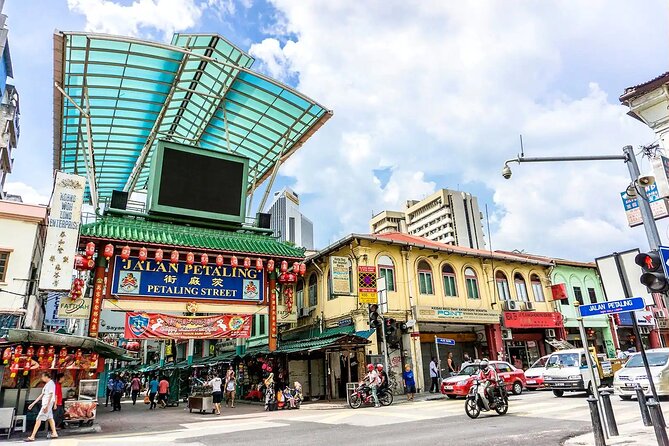
From Central Market, you walk toward Petaling Street, the center of Kuala Lumpur’s Chinatown. The market is not just a passage between food stops. It is where you can look at souvenirs, watch the trade of daily goods, and get a feel for how old commercial streets function alongside newer Kuala Lumpur.
The route is designed around tasting, not a long lecture on every building. That is useful if you want food first, but it also means you should not book this expecting a full architectural or historical tour of Chinatown.
The guide helps connect the dishes to the communities that sell and eat them. This is one of the tour’s best features. A plate of noodles or a cup of tea becomes more interesting when you know which food tradition it belongs to and how it fits into local daily life.
The walking distance is moderate rather than demanding. Still, wear comfortable shoes. You will cover roughly 2 to 3 kilometers, with several standing and walking sections between stops.
Bakkwa brings Malaysian Chinese flavor first
One of the first tastings is bakkwa, a Chinese dry meat specialty. In Malaysia, bakkwa is closely associated with barbecue-style slices of seasoned meat, and the experience includes two types of meat.
This is a strong opening because bakkwa is easy to share and immediately different from an ordinary restaurant appetizer. Expect a sweet, savory, grilled flavor and a texture that is denser than fresh-roasted meat.
The useful part of tasting two versions is comparison. You can think about the seasoning and texture side by side instead of treating bakkwa as one single dish. If you have dietary restrictions, ask in advance what meat options can be provided.
The stop is brief, about 15 minutes. That timing keeps the tour moving, but it also means the guide cannot linger at every shop for a long explanation. You are paying for a sequence of tastings and local orientation, not a private cooking class.
Apam balik combines a soft center with crisp edges
Next comes apam balik, a Malaysian-style pancake. The appeal is in the contrast: a fluffy middle with crunchy edges, usually paired with a sweet filling.
This is the sort of street food that works well on a walking tour because it is familiar enough to enjoy at once but distinct from an ordinary Western pancake. The texture is the main event, so eat it fresh if possible.
I like this stop because it shows how Malaysian food often plays with texture. One bite can be soft, crisp, sweet, and slightly chewy. It is also a sensible portion after bakkwa, since the route is meant to build a meal through small tastings rather than give you one enormous plate.
The tour description does not promise a fixed filling or a single vendor every time. Street food locations can change based on availability, while the operator says the same type of local experience will be maintained. That flexibility is practical, but it means you should not expect an identical dish presentation on every date.
A few more tours around Kuala Lumpur worth comparing
- From Kuala Lumpur: Historical Melaka Day Tour with Lunch
★ 4.4 · 2,297 reviews - Historical Malacca Guided Day Tour (Shared Tour)
★ 5.0 · 2,172 reviews - Kuala Lumpur: Sambal Street Food Tour with 15+ Tastings
★ 4.9 · 1,657 reviews - Genting Highland & Batu Cave Guided Day Tour (SIC/Shared Tour)
★ 5.0 · 1,289 reviews
Soybean drink and tropical fruit provide a reset
After the first food tastings, you stop for a soybean drink, served hot or cold. The hot version may come as tofu fa, a soft, jelly-like soybean curd dessert.
This pause matters. A food walk needs breaks between heavier or sweeter items, and soybean drink gives you something lighter before the next set of tastings. You can choose hot or cold, which is useful in Kuala Lumpur’s warm weather, though the hot tofu fa offers a more distinct local texture.
Tropical fruits are also sampled during the walk. The exact fruit selection is not fixed, so consider this a chance to try whatever is available rather than a promise of specific varieties.
Bottled water is included. That sounds minor, but it is welcome during a 2 to 3 kilometer walk with several food stops. Additional drinks, including alcohol, are not included.
Teh tarik and roti canai show Indian Muslim Kuala Lumpur
The route then heads to a local Indian Muslim restaurant for teh tarik and roti canai. These are two of Malaysia’s most recognizable everyday foods, and together they make one of the most useful stops on the tour.
Teh tarik is pulled tea, traditionally poured between containers to cool it and create a foamy top. The result is sweet, milky, and easy to drink. It is often treated as a signature Malaysian beverage, and tasting it in the setting of an Indian Muslim restaurant adds cultural context that you may miss if you simply order it at a café.
Roti canai is a flaky flatbread served as a breakfast or tea-time food. The best part is the contrast between its crisp layers and softer interior. One person who took the tour described it as the best roti of their trip, which gives this stop particular weight if you care about bread and breakfast foods.
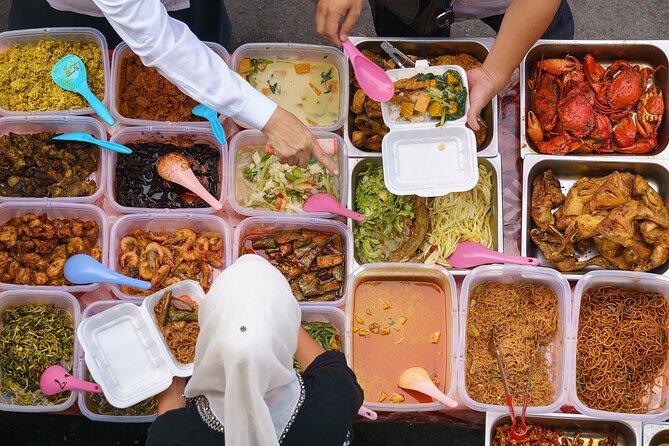
This is also where the wide cultural range of the route becomes clear. In less than three hours, you move from Chinese dry meat to Malaysian pancakes to an Indian Muslim restaurant, without leaving the Chinatown area.
Hokkien mee closes the route with something savory
The final food stop is a Chinese restaurant serving Hokkien mee. This is a satisfying way to finish because the route moves from snacks and sweets back to a hearty noodle dish.
Hokkien mee varies by place, and the Kuala Lumpur version is known for dark, savory noodles with a strong sauce. The tour describes the serving as a unique-style Chinese noodle tasting, so the exact preparation can depend on the restaurant available that day.
By this point, you should have eaten enough to call the route a meal. That is why the advice to arrive with an empty stomach is worth following. This is not a token sample of two or three bites. It combines several food tests, drinks, dessert, fruit, and noodles.
The walk ends back at the original meeting point. You are not left to find your way across the city after the final dish, which makes the Central Market start and finish especially convenient.
What the $104.80 price really covers
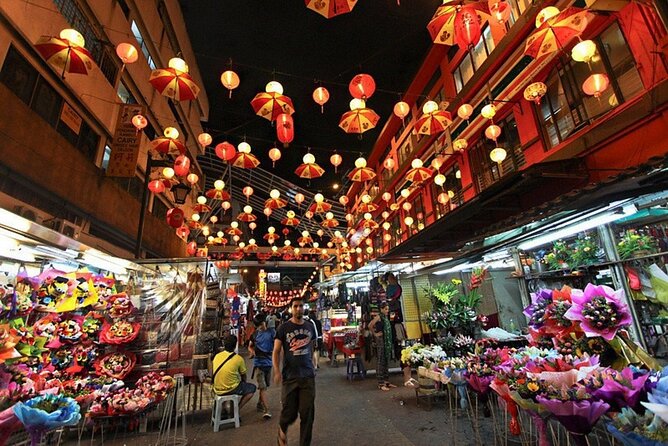
At $104.80 per person, this is not a budget food crawl. Kuala Lumpur offers inexpensive street food, and a visitor who is comfortable ordering alone can eat for much less.
The price makes more sense if you place value on the structure. You receive an English-speaking local host, a planned route, food tastings, drinks, dessert tastings, bottled water, and a small-group setting capped at 15 people. You also avoid the uncertainty of choosing unfamiliar stalls and guessing what to order.
The strongest value is cultural range. The route does not focus on one famous dish. It introduces several food traditions in one short outing, with a guide helping you understand what you are eating.
Still, I would be realistic. If you mainly want the cheapest possible dinner, book elsewhere or explore Petaling Street on your own. If you have only a short time in Kuala Lumpur and want a guided introduction to Chinatown’s food, the cost buys convenience and explanation.
A solo booking may feel less economical than joining with friends. One person who took the walk alone found the food enjoyable but felt a group would have made sharing more fun. That is a fair point: with more people, tasting and comparing dishes can become part of the pleasure.
Group size, dietary needs, and walking comfort
A maximum of 15 people is a useful middle ground. It is small enough for questions and personal attention, but not so small that the walk becomes a private-tour price for everyone.
The experience requires a moderate level of physical fitness. You will walk about 2 to 3 kilometers and move between several food stops. There is no indication of strenuous activity, but you should be comfortable walking through city streets and standing during tastings.
Halal and vegetarian options are available. Give the operator your requirements when booking, and tell the host about allergies or a special diet before the food begins. Do not wait until the first stall if a particular ingredient could cause a serious problem.
The food location may change if a vendor is unavailable. This is normal for a street-food route, and the important point is that the operator promises to preserve the type of authentic experience rather than one fixed shop.
If a Hindu temple visit forms part of the day’s route, shoulders must be covered and knees must be covered. Shoes are removed at the entrance, with lockers available. A scarf or shawl is an easy way to meet the shoulder requirement.
Who will get the most from this experience
I would choose this walk if you want a first taste of Kuala Lumpur’s food culture without spending several days learning the city’s eating districts on your own.
It suits:
- First-time visitors who want an introduction to Chinatown
- People who enjoy trying several small portions instead of one formal meal
- Solo visitors who want a local host and a planned route
- Couples and small groups who enjoy comparing unfamiliar foods
- Anyone interested in Chinese, Malay, and Indian Muslim food traditions
- Visitors who can manage moderate city walking and arrive hungry
It is less suitable if you want a long history tour, a cooking lesson, luxury dining, or a very cheap meal. It may also be frustrating for someone who needs an exact restaurant and fixed menu, since the street-food site can change.
The tour is not designed around hotel convenience. You must reach Central Market yourself, so factor in the time and cost of a taxi or Grab.
How to prepare for the best food walk
Keep lunch light. The route includes multiple savory foods, sweets, drinks, fruit, and noodles, so arriving full would reduce the value of the experience.
Wear comfortable shoes and clothing suitable for warm city walking. Carry a light scarf if you want an easy solution for temple dress rules, though the provided information only explains the clothing requirement if a Hindu temple is visited.
Bring your mobile phone and provide your number and the names of all participants so the operator can coordinate with you on the day. Confirmation is provided when you book, but activity timing can still be affected by weather or safety procedures.
Most people can participate, but the experience is not completely passive. You need to walk between locations, keep to the group, and be open to trying foods that may be new to you.
Should you book this Chinatown food tour?
Book it if you want a guided introduction to Kuala Lumpur’s food culture and like the idea of sampling bakkwa, apam balik, tofu fa, teh tarik, roti canai, fruit, and Hokkien mee in one afternoon.
I especially like the range of the menu and the chance to see how different communities shape Chinatown’s food. Rayhan Raj Naidu is a notable host name, with praise focused on his friendly service and willingness to offer useful ideas for the rest of a Malaysia trip.
Skip it if your main goal is saving money or choosing your own restaurants. At $104.80, this is a structured food-and-culture outing, not a bargain dinner. For the right audience, though, it offers a convenient, well-paced way to understand what makes Kuala Lumpur’s Chinatown worth eating through.
FAQ
Where does the Chinatown food tour start?
It starts at the entrance of Central Market Kuala Lumpur, near the information counter.
What time does the tour begin?
The tour starts at 4:00 pm.
How long does the experience last?
It lasts approximately three hours.
How much walking is involved?
The route includes about 2 to 3 kilometers of walking, with stops to eat, rest, and listen to the host.
What food and drinks are included?
Included tastings include bakkwa, Malaysian-style pancake called apam balik, soybean drink or tofu fa, tropical fruit, teh tarik, roti canai, and Hokkien mee. Food, drinks, dessert tastings, and bottled water are included.
Are vegetarian and halal options available?
Yes. Halal and vegetarian options are available. You should advise the operator of dietary requirements or allergies when booking.
Is hotel transportation included?
No. Hotel pickup and drop-off are not included. You must arrange your own transportation to and from Central Market, and the activity ends at the original meeting point.
Can I cancel for a refund?
Yes. You can cancel at least 24 hours before the local start time for a full refund. Changes or cancellations made less than 24 hours before the start time are not accepted for a refund.
More tours in Kuala Lumpur we've reviewed
- Batu Caves & Putrajaya Highlights: Landmarks & Botanical Garden★ 4.5 · 3 reviews
- AVANI Sepang Goldcoast Resort Hotel TO Kuala Lumpur Hotel Door to Door Transfer★ 4.5 · 3 reviews
- KL Cruise Excursions from Port Klang for KL City Tour★ 4.5 · 3 reviews
- Fireflies & Silver Leaf monkey Tour With Free Batu Caves Temple★ 5.0 · 3 reviews
- Private Kuala Lumpur City Tour with KL Tower & Batu Caves★ 5.0 · 3 reviews
- Exclusive Malacca Private Tour★ 5.0 · 3 reviews
- Fireflies and Kuala Selangor Tour Including Dinner★ 3.5 · 3 reviews
- Private Batu Caves & Petronas Twin Tower Tickets With Lunch *26*★ 5.0 · 3 reviews