
Reviewed · KUALA LUMPUR TEMPLE & MOSQUE TOURS
Kuala Lumpur: Temple & Shrine Private Half Day Tour
Kuala Lumpur’s skyline tells only part of the story. This private half-day tour takes you from the 140-foot Lord Murugan statue at Batu Caves to a Sikh gurdwara, an Anglican cathedral, a Chinese temple, a Buddhist compound, and the National Mosque. Few city tours pack so many faiths into one morning.
I like the easy private transport and the sharp contrast between the stops. I also like that the route includes places many first-time visitors would not reach on their own, especially Buddhist Maha Vihara and the Gurdwara Sahib Temple. The main drawback is time: six religious sites in 270 minutes means some visits will feel brief, and Batu Caves requires climbing 272 steps.
In This Review
- Key points at a glance
- Why this route works in Kuala Lumpur
- Batu Caves and the 272-step climb
- Thean Hou Temple’s six-tiered design
- Buddhist Maha Vihara’s calm temple compound
- St. Mary’s Cathedral and Gothic Kuala Lumpur
- The National Mosque’s umbrella-shaped dome
- Gurdwara Sahib and Sikh community life
- Transport, timing, and the private format
- Is $47 a fair price?
- Who should book this half-day tour?
- Should you book it?
- FAQ
- How long does the Kuala Lumpur temple tour last?
- Which places of worship are included?
- How many steps are there at Batu Caves?
- Is hotel pickup included?
- Where is the meeting point?
- Is the tour private?
- What does the price include?
Key points at a glance
- Batu Caves brings the biggest visual moment: See the towering Lord Murugan statue, limestone caves, shrines, and city views after climbing 272 steps.
- Thean Hou Temple is the most decorative stop: Expect carved details, prayer halls, gardens, koi ponds, and a six-tiered pagoda.
- Six faith sites fit into one private route: Hindu, Taoist and Chinese folk religion, Buddhist, Anglican Christian, Islamic, and Sikh traditions all appear in one outing.
- A private vehicle keeps the day practical: You travel in air conditioning with a driver-guide rather than managing several taxis.
- Guide quality can shape the experience: A guide named Bala has been praised for good routing and useful tips at the sites.
- Pickup has a clear boundary: Free hotel pickup and drop-off applies within 5 kilometers of the Twin Towers. Others meet at Corus KLCC.
Why this route works in Kuala Lumpur
Kuala Lumpur is a city where major religious buildings sit surprisingly close to shopping districts, office towers, and highways. This tour uses that fact well. Instead of treating each shrine as an isolated photo stop, it lets you compare different forms of worship and design across one compact outing.
You begin with Hindu devotion at Batu Caves, move to Chinese temple architecture at Thean Hou, then visit a Sri Lankan Buddhist center. The second half shifts to an Anglican cathedral, Malaysia’s national mosque, and a Sikh gurdwara. That sequence gives the day a clear rhythm, even though the visits cover very different traditions.
The tour lasts 4.5 hours and is private, so the pace can feel more personal than a large bus excursion. Your English-speaking driver-guide is expected to explain the background and remind you about dress codes and conduct before you enter places of worship. That guidance matters here. These are active religious sites, not just monuments.
More temple and mosque visits in Kuala Lumpur:
- Kuala Lumpur: Private Batu Cave, National Mosque Tour, Lunch
★ 4.7 · 236 reviews - Putrajaya Half Day Tour with Pink Mosque & River Cruise(SIC)
★ 5.0 · 146 reviews - Kuala Lumpur: Batu Caves, Thean Hou Temple & National Mosque
★ 4.3 · 30 reviews
Batu Caves and the 272-step climb
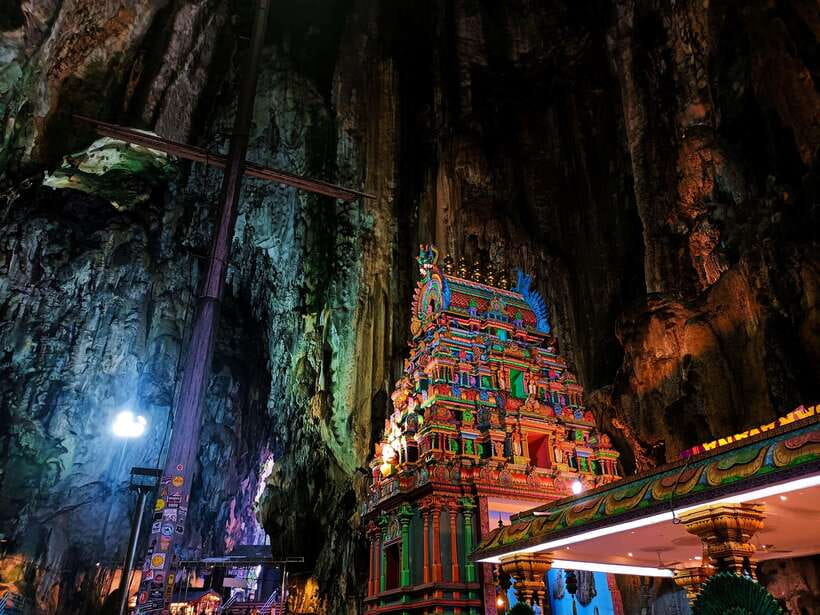
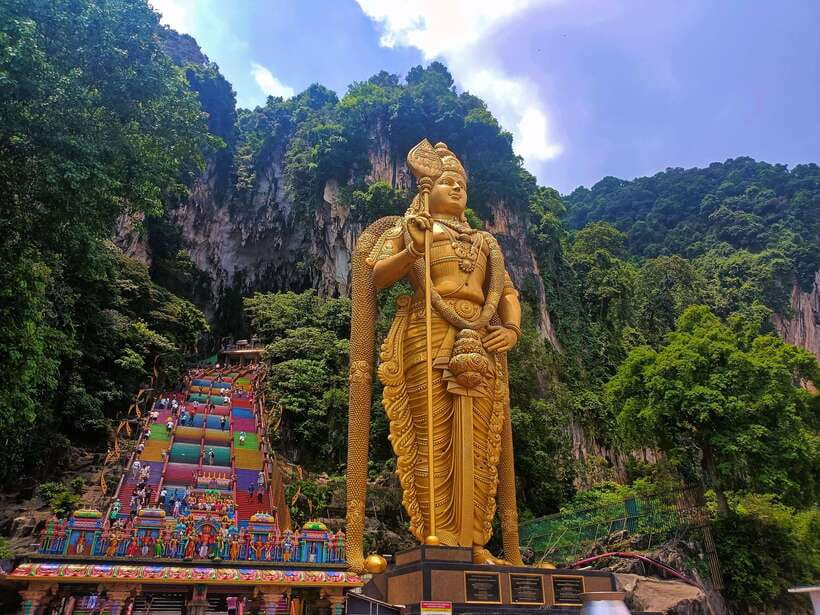
Batu Caves is the showstopper, and it comes first for good reason. The enormous gold-colored statue of Lord Murugan greets you beside the limestone cliffs, creating one of Kuala Lumpur’s most recognizable sights before you even reach the stairs.
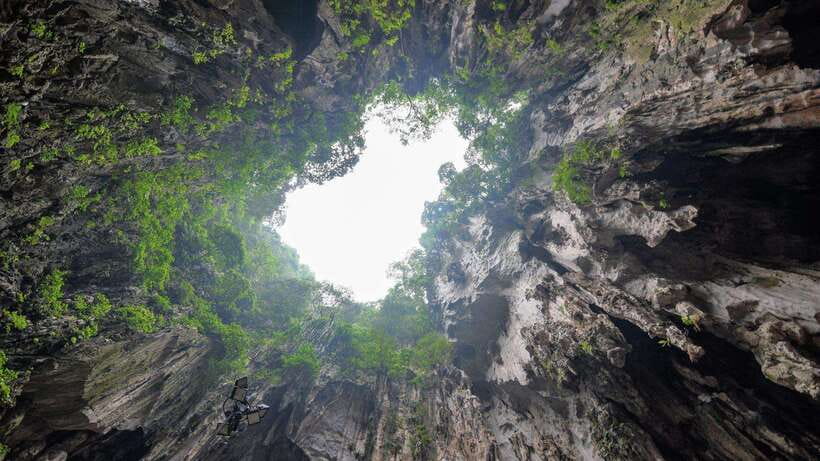
The main cave sits at the top of 272 steps. You can expect religious sculptures and paintings inside, along with wide views back toward the city. The climb is the one part of the day that demands real effort, so wear practical shoes and be honest about your stamina before booking.
The stop is more than a quick landmark photograph. Batu Caves remains a sacred Hindu sanctuary, and the cave setting gives the visit a strong sense of place. You may also notice monkeys around the stairway area, although the supplied tour details do not promise them, so treat that as a possibility rather than a feature.
Plan on using your time carefully. The statue, staircase, cave shrine, and views all compete for attention. If you spend too long taking photographs at the entrance, you may have less time for the upper cave and its religious art.
Your driver-guide gives a briefing during the journey from Kuala Lumpur, which is useful preparation for this first stop. Listen closely to clothing advice and temple rules. The same care applies at every other religious site on the route.
Thean Hou Temple’s six-tiered design
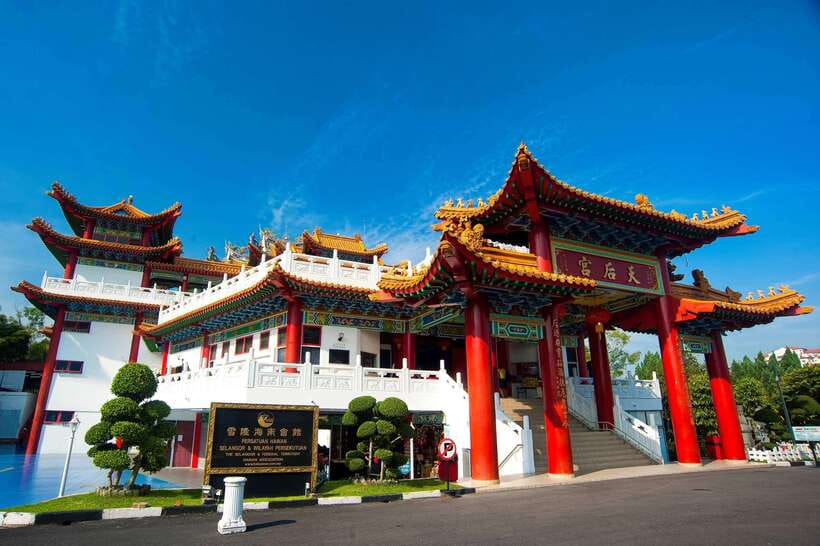
Thean Hou Temple changes the mood completely. Dedicated to Mazu, the Chinese sea goddess, it is known for detailed Chinese architecture, layered decoration, and a striking six-tiered pagoda.
I like this stop because it offers more than a single prayer hall. You can walk through gardens, look over koi ponds, and examine the carvings and decorative work at a slower pace than the Batu Caves climb allows. The building’s visual detail rewards close attention, so this is a good place to put the camera down for a moment.
The temple also helps explain Kuala Lumpur’s Chinese cultural presence without requiring a long museum visit. Prayer halls, ornament, and open grounds give you several ways to understand the site. Your guide can add context, but you should also take time to notice how the building uses height, color, and repeated patterns.
The practical limitation is the short overall schedule. Six stops in one half-day do not leave unlimited time at Thean Hou Temple. If you love architecture and photography, you may wish this visit lasted longer. Still, the private format makes it easier to ask for a little extra attention here if traffic and timing allow.
Buddhist Maha Vihara’s calm temple compound
Buddhist Maha Vihara provides a quieter contrast after Thean Hou. The compound follows traditional Sri Lankan architectural forms, with elaborate carvings, painted surfaces, and statues of Buddha, Bodhisattvas, and other respected figures.
This is a useful stop for understanding Malaysian Buddhism as a living community rather than simply seeing a beautiful building. The temple functions as a place of worship, study, and community activity. That gives the visit more substance than a quick exterior photograph.
I would approach this site respectfully and quietly. Look at the carvings and paintings, but remember that people may be praying or attending religious activities. Your driver-guide is there to explain the basic rules and help you avoid awkward mistakes.
Maha Vihara may appeal most to people who prefer atmosphere and detail over grand scale. It does not offer the dramatic staircase of Batu Caves or the huge dome of the National Mosque. Its value lies in the calm setting and the chance to see another Buddhist tradition within Kuala Lumpur’s religious mix.
A few more Kuala Lumpur tours and experiences worth a look
- Private Half-Day Batu Caves and Cutural Tour in Kuala Lumpur
★ 5.0 · 3,107 reviews - Private Tour Kuala Lumpur with Petronas Twin Towers Observation Deck & Batu Cave
★ 5.0 · 1,029 reviews - Kuala Lumpur: Full-Day Private City Highlights Tour
★ 4.6 · 589 reviews - Historical Malacca Day Tour from Kuala Lumpur (Private Tour)
★ 5.0 · 515 reviews
St. Mary’s Cathedral and Gothic Kuala Lumpur
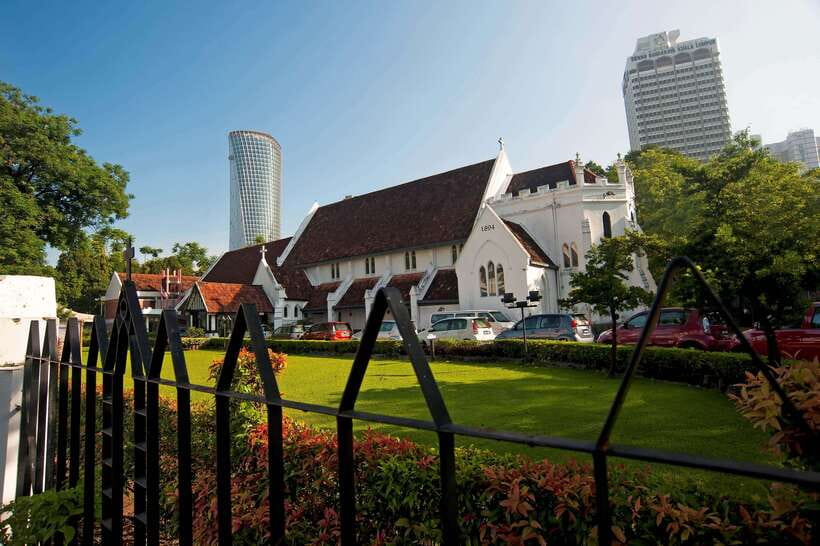
St. Mary’s Cathedral is a surprising change of scene. Built in 1894, it uses English Gothic Revival design, with pointed arches, stained-glass windows, a tall spire, woodwork, and a quiet interior.
The cathedral adds an important Christian chapter to the route. In a few hours, you move from Hindu cave worship and Chinese temple decoration to an Anglican church shaped by British architectural influence. That contrast makes the whole tour feel more meaningful than a collection of unrelated stops.
Inside, focus on the craftsmanship. The woodwork and stained glass create a more restrained atmosphere than the ornate temples. You may find the cathedral visit especially appealing if you enjoy historic buildings, church interiors, or architectural comparison.
Do not expect a long guided church tour based on the supplied details. This is a sightseeing stop within a tightly timed route. Use the visit to look carefully at the arches, windows, and interior details, then allow the next site to provide a different perspective.
The National Mosque’s umbrella-shaped dome
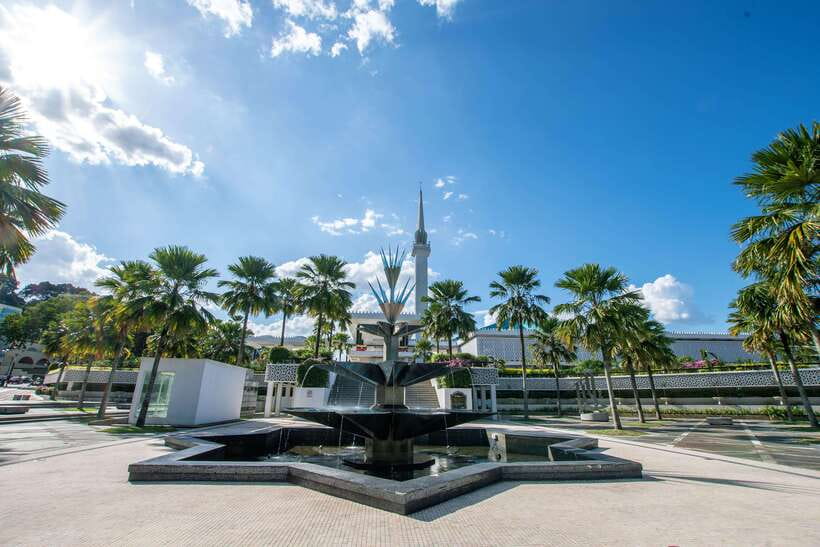
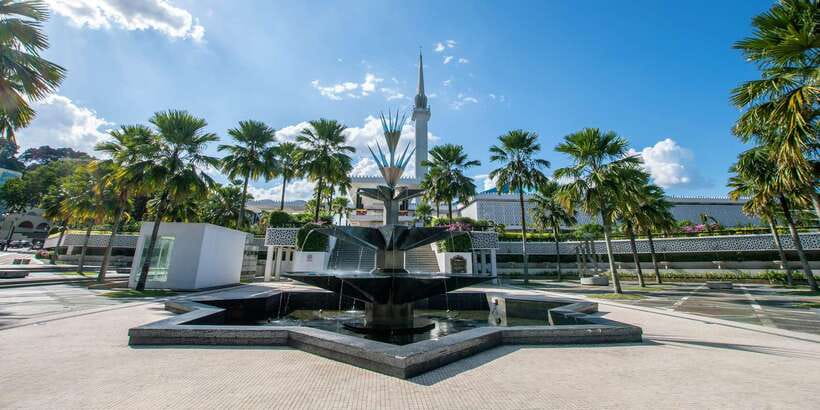
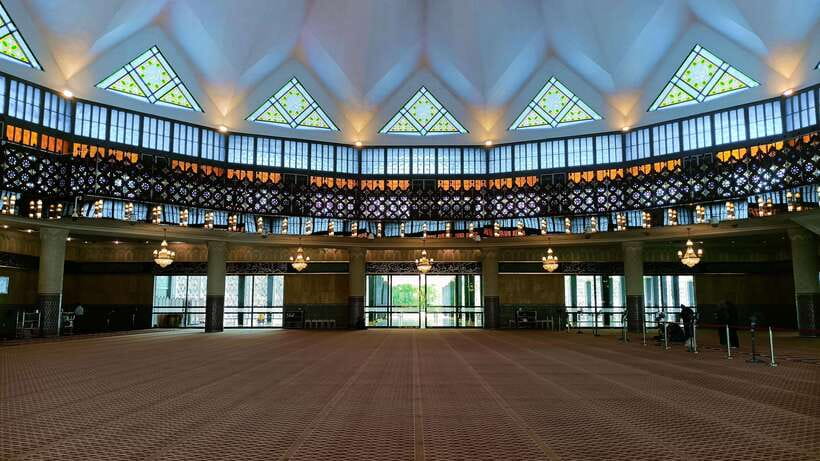
The National Mosque of Malaysia, completed in 1965, brings modern design into the day. Its most memorable feature is the large blue umbrella-shaped dome, a reference in form to the sheltering role of an umbrella and a striking contrast to the pointed forms of St. Mary’s Cathedral.
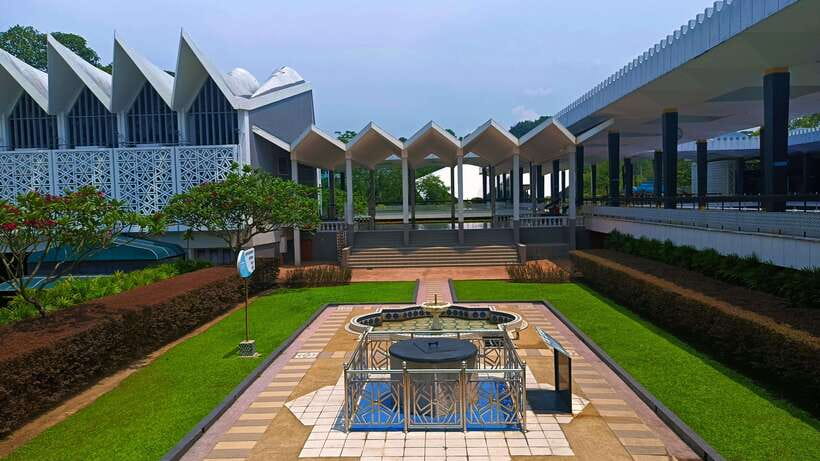
Inside, Islamic geometric designs and calligraphy decorate the prayer hall. The grounds include gardens and reflecting lakes, giving the mosque a spacious and quiet setting despite its place in the capital.
This stop is valuable because it shows how Malaysian identity can be expressed through modern religious architecture. The mosque is not trying to imitate a European church or an older regional temple. Its design has its own visual language, and the open grounds give you time to appreciate the building from different angles.
Dress and behavior matter here. The driver-guide briefs you on regulations before the visits, but you should still arrive prepared to follow instructions. The tour description does not specify clothing rental or exact entry rules, so rely on the guide’s current advice and dress conservatively.
The National Mosque can become one of the most rewarding stops for anyone interested in design. The dome catches the eye, but the geometric decoration, calligraphy, water, and gardens give the visit its full character.
Gurdwara Sahib and Sikh community life
The final religious stop is Guru Nanak Darbar Tatt Khalsa Diwan Gurdwara, also described as Gurdwara Sahib Temple. It is a place of devotion for Malaysia’s Sikh community, with a main prayer hall where the Sikh holy scripture is revered.
The gurdwara also serves as a setting for religious events, community gatherings, and charitable work. That community role gives the stop a useful human dimension. You are not only looking at architecture. You are seeing a place organized around worship, service, and shared responsibility.
As at the other sites, follow the guide’s instructions and behave quietly in the prayer hall. The stop closes the tour on a fitting note because it brings together faith and community service after a day focused on religious buildings.
The final stop may feel less visually dramatic than Batu Caves or Thean Hou Temple. Its importance comes from the chance to include Sikhism in a tour that already covers several other traditions. That range is one of the route’s strongest features.
Transport, timing, and the private format
The tour uses an air-conditioned vehicle, with the listed driving segments including about 30 minutes to the first stop and another 30-minute vehicle transfer in the route. Kuala Lumpur traffic can affect how much time you spend at each location, so think of the 270-minute duration as a planned framework rather than a guarantee of equal time everywhere.
A private group is a good match for this route. You can ask questions, adjust your attention toward architecture or religious practice, and avoid waiting for a large group to regroup. The driver-assisted format also removes the stress of finding transport between six sites.
One point needs careful attention: complimentary pickup and drop-off applies to hotels or residences within a 5-kilometer radius of the Twin Towers. If you stay outside central Kuala Lumpur, you are asked to make your own way to Corus KLCC. Outlying hotel pickup may be possible, but any extra charge is paid directly to the local operator.
The usual meeting point is Corus KLCC, and drop-off is at the same pickup point unless your selected option provides another arrangement. Be in the hotel lobby 10 minutes early if using pickup. The operator uses WhatsApp to send driver details by 9 p.m. the night before, so download it and watch for the message.
A guide named Bala has been singled out for reaching the key sites efficiently and knowing useful tips. If Bala is assigned to your group, you can reasonably expect a guide who pays attention to routing and practical details. Guide assignments can change, so book the service rather than a specific person unless the operator confirms otherwise.
Is $47 a fair price?
At $47 per person, the value depends mainly on group size and your transport needs. The price includes an air-conditioned vehicle and driver-assisted touring, but not personal expenses or travel insurance.
For a private group, that is a reasonable way to cover six religious sites without arranging several separate rides. You are paying for convenience, a planned route, local explanation, and time saved between locations. The price is less attractive if you are traveling alone and prefer to use inexpensive public transport, or if you want to spend a full hour at each temple.
The tour also saves you from making difficult choices about what to leave out. Kuala Lumpur has many places of worship, and first-time visitors may not know how to connect them into a sensible route. Here, the variety is built in.
I would judge the price favorably for couples, families, and small private groups that want cultural range in a single morning. I would be more cautious if your main goal is detailed religious study or extended photography. For that, fewer stops and more time at each site would serve you better.
Who should book this half-day tour?
You should consider this tour if you want a broad introduction to Kuala Lumpur’s religious communities and prefer a private vehicle to independent planning. It suits first-time visitors, architecture fans, families who value a clear schedule, and anyone who wants to see more than the city’s shopping malls and towers.
It is also useful if you have limited time in Kuala Lumpur. In 4.5 hours, you see six distinct places and several major styles of religious architecture. The route gives you a strong first look at the city’s cultural variety.
You may want another option if stairs are difficult for you, since Batu Caves includes 272 steps and is a central highlight. You may also feel rushed if you prefer long visits, extended prayer time, or detailed photography at each location.
Wear respectful clothing, comfortable shoes, and bring water for the climb. Keep your schedule flexible enough for traffic, and ask the guide about current entry rules at each place of worship.
Should you book it?
Book this tour if you want maximum cultural variety with minimum transport hassle. Batu Caves supplies the big visual moment, while Thean Hou Temple, Maha Vihara, St. Mary’s Cathedral, the National Mosque, and the gurdwara provide the deeper range.
Skip it if you want a slow, single-site visit or cannot manage the Batu Caves stairs. For most visitors with one free half-day, though, this is a smart and well-planned introduction to Kuala Lumpur’s many faiths, with the private format adding real value.
FAQ
How long does the Kuala Lumpur temple tour last?
The tour lasts 270 minutes, or 4.5 hours.
Which places of worship are included?
The route includes Batu Caves, Thean Hou Temple, Buddhist Maha Vihara, St. Mary’s Cathedral Kuala Lumpur, the National Mosque of Malaysia, and Guru Nanak Darbar Tatt Khalsa Diwan Gurdwara.
How many steps are there at Batu Caves?
You can climb 272 steps to reach the main cave.
Is hotel pickup included?
Complimentary pickup and drop-off is available from hotels or residences within 5 kilometers of the Twin Towers. If you stay outside central Kuala Lumpur, you should go to Corus KLCC, unless you arrange an outlying hotel pickup and pay any extra charge directly to the local operator.
Where is the meeting point?
The standard meeting point is Corus KLCC, with drop-off at the same location. Your selected booking option may provide a different pickup arrangement.
Is the tour private?
Yes. The experience is operated for a private group and includes an English-speaking driver-guide.
What does the price include?
The $47 per person price includes an air-conditioned vehicle and driver-assisted touring. Travel insurance and personal expenses are not included.
More tours in Kuala Lumpur we've reviewed
- Batu Caves & Putrajaya Highlights: Landmarks & Botanical Garden★ 4.5 · 3 reviews
- AVANI Sepang Goldcoast Resort Hotel TO Kuala Lumpur Hotel Door to Door Transfer★ 4.5 · 3 reviews
- KL Cruise Excursions from Port Klang for KL City Tour★ 4.5 · 3 reviews
- Fireflies & Silver Leaf monkey Tour With Free Batu Caves Temple★ 5.0 · 3 reviews
- Private Kuala Lumpur City Tour with KL Tower & Batu Caves★ 5.0 · 3 reviews
- Exclusive Malacca Private Tour★ 5.0 · 3 reviews
- Fireflies and Kuala Selangor Tour Including Dinner★ 3.5 · 3 reviews
- Private Batu Caves & Petronas Twin Tower Tickets With Lunch *26*★ 5.0 · 3 reviews
Kuala Lumpur Temple & Mosque Tours, compared.
Putrajaya Half Day Tour with Pink Mosque & River Cruise(SIC)
Read our review →
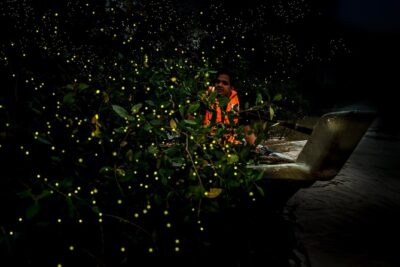
Kuala Selangor Fireflies – Batu Caves Temple- Malawati Hill DayTour With Dinner
Read our review →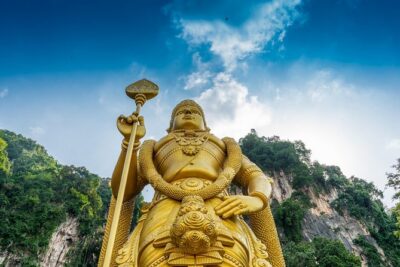
Private Batu Caves, National Mosque & Religious Tour with Lunch
Read our review →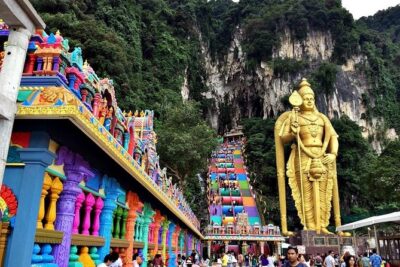

Putrajaya Tour with Traditional Boat Cruise & Pink Mosque (Private)
Read our review →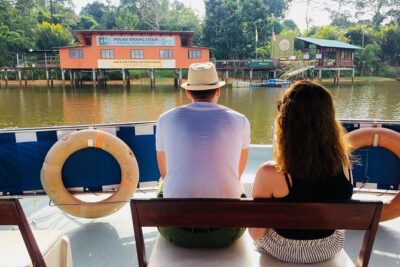
Wildlife & Wonders: Orang Utan Island + Perak Cave Temple Tour
Read our review →Browse the lists this tour appears in