Reviewed · PRIVATE
Half Day Private Cultural Discovery in Kuala Lumpur
Kuala Lumpur’s best cultural lesson comes through its places of worship. This private half-day trip links the Hindu shrines at Batu Caves, the Chinese Thean Hou Temple, and Masjid Negara, then adds Chinatown, Central Market, and Little India. I like the private car and the freedom to explore each stop without being tied to a large group. I also like the range of traditions packed into four hours.
The main drawback is pace. Four hours is enough for a useful introduction, but not enough for a long visit at every stop. The route also involves walking and, at Batu Caves, a climb, so wear sensible shoes and modest clothing.
In This Review
Key points at a glance
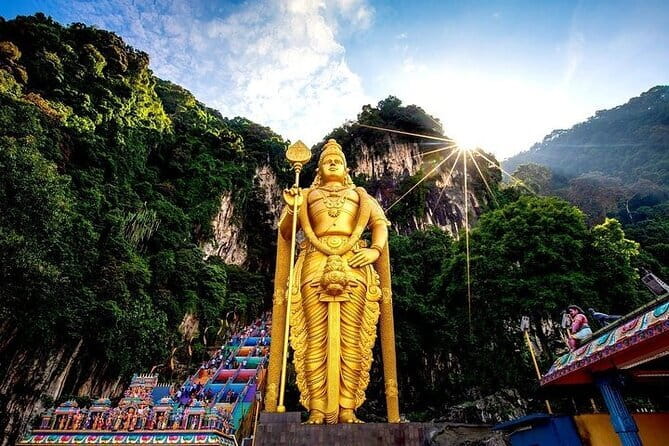
- Batu Caves sets the tone: Explore a major Hindu shrine in a limestone hill and spend about an hour among its caves and temples.
- Three faiths in one short tour: Visit Hindu, Chinese, and Islamic places of worship, each with a different setting and style.
- Private transport saves time: Hotel pickup, drop-off, and an air-conditioned vehicle make the route easier in Kuala Lumpur’s heat and traffic.
- You control the stops: Your private group gets independent time rather than following a large crowd from site to site.
- The city’s everyday culture is included: Chinatown, Central Market, and Brickfields’ Little India add food, shopping, crafts, and street life to the religious sites.
- Friday needs planning: Masjid Negara is closed to tourists on Friday, so choose another departure day if the mosque is important to you.
I see this as a city orientation with a cultural focus, not a slow temple tour. You move from a dramatic limestone shrine to a Chinese temple, a national mosque, old market districts, and Little India. That mix gives you a clearer sense of Kuala Lumpur than a simple drive past monuments.
The private format matters. Your English-speaking driver-guide takes care of the route while you get out, look around, and return to the car when ready. Guides who have led this experience include Sathesh, Kumar, Shiva, and Vikram. Their role can vary from full explanation at each stop to practical help with photos, timing, and local suggestions, so you should treat the guide as part of the experience rather than just a driver.
At $30 per person, the tour offers solid value if you want several major sights without arranging separate taxis. You receive private transportation, an air-conditioned car, hotel pickup and drop-off, and an English-speaking driver-guide. Food and drinks are not included. Group discounts are offered, but the available saving is not specified, so check the price for your party before booking.
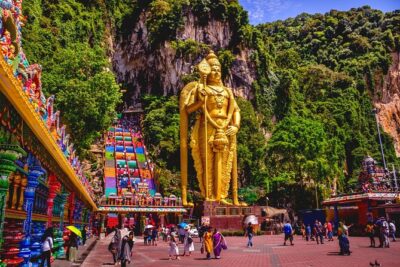
Batu Caves is the most dramatic stop. The site occupies a limestone hill in Gombak, Selangor, and contains caves and temples dedicated to Lord Murugan. The setting feels very different from central Kuala Lumpur: rock, open air, shrines, and a strong sense of pilgrimage replace the city’s towers and shopping streets.
You have about an hour here. That is enough to look through the temple area, see the shrines, and take in the scale of the place. The visit is not simply a photo stop. If you pause to observe the religious details, you get a useful first look at Hindu worship in Malaysia.
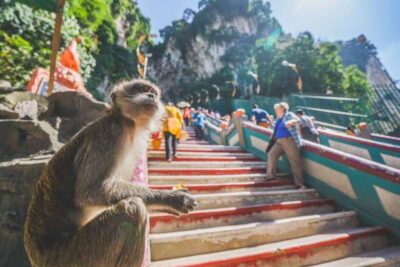
The climb is the practical issue. The tour information does not specify the number of steps, but it clearly requires climbing, so comfortable footwear is essential. Heat can make the ascent feel harder than expected. Give yourself time, move at your own pace, and do not treat the hour as a race to the top.
Dress with care. Women should cover their shoulders and knees, and men should also wear modest clothing. Shorts and sleeveless shirts are discouraged. This is good advice for the other religious sites too, since suitable clothing keeps your visit respectful and avoids last-minute fuss.
The private arrangement helps here. Your guide can point out where to go, help with photographs, and allow you to explore independently. That freedom is useful if one person in your party wants to linger while another prefers a shorter visit.
Masjid Negara gives the tour a different mood. Completed in 1965, it is a major symbol of Malaysia’s Islamic heritage and sits among carefully maintained gardens. The architecture and open grounds offer a sharp contrast to the enclosed caves at Batu Caves.
The planned visit lasts about 30 minutes. I would use that time to appreciate the building’s design, the setting, and its role as a national place of worship rather than expecting a long architectural tour. The stop works best when you arrive prepared to observe quietly and follow local rules.
The important scheduling warning is simple: Masjid Negara is closed to tourists on Friday. If the mosque is one of your main reasons for booking, select a morning or afternoon on another day. The experience can still include the other stops on Friday, but the religious sequence will be incomplete.
Because this is a private activity, you avoid the awkwardness of holding up a large group if you need a moment to adjust clothing or take in the surroundings. Still, 30 minutes is brief, and traffic or a late start could reduce your time. Confirm the pickup time and keep the morning or afternoon reasonably clear.
Thean Hou Temple brings you into Kuala Lumpur’s Chinese religious tradition. Dedicated to Thean Hou, the Heavenly Mother and a Chinese sea goddess, the temple was completed in 1987. Its traditional Chinese design and elevated city setting make it a visually strong stop, even for visitors who are new to Chinese temple customs.
You have around 30 minutes here. The most memorable part is not just the rooflines or decoration, but the chance to light an incense stick and take part in a small act of worship. You should follow your guide’s directions and watch how the space is used rather than treating it only as a backdrop for photographs.
This stop rewards curiosity. Ask about the deity, the purpose of the incense, and the meaning of the temple’s features. The guide may offer an overview of Malaysian culture and history, as Sathesh, Kumar, and Shiva have been described as doing during past tours. The value of the explanation is especially high here because a short visit can otherwise become a quick look at an unfamiliar building.
The half-hour allocation is also its limit. You will see the principal areas, but you will not have time for a long, unhurried exploration. I would place this tour early in a Kuala Lumpur visit, then return to Thean Hou Temple later if the Chinese religious side of the city interests you.
Chinatown, centered on Petaling Street, shifts the focus from worship to commerce and daily city life. It is a lively district with shops, food, local trade, and a long connection to Kuala Lumpur’s Chinese community.
The scheduled visit is about 30 minutes, which makes this more of a short orientation than a full shopping session. You can get your bearings, see the street atmosphere, and note places you may want to revisit independently. If you hope to eat your way through the area or browse every stall, you will need more time than this tour provides.
That short stop is still useful because the driver-guide can place Chinatown within the wider route. After seeing Thean Hou Temple, you encounter a more public and commercial side of Chinese Malaysian culture. I like that contrast. It prevents the tour from becoming a string of religious buildings with no connection to ordinary city life.
Food is not included, so any meal or snack here costs extra. The schedule also does not promise a food tasting. Think of this as a chance to see Petaling Street and receive local suggestions, not a dedicated culinary tour.
Central Market, also called Pasar Seni, has served Kuala Lumpur since 1888. It began as a wet market and later became a cultural and shopping center. The change tells you something useful about the city: old commercial spaces can take on a new role while remaining part of the central urban experience.
You get approximately 30 minutes at Central Market. Use it to browse Malaysian crafts, souvenirs, and local design. This is a sensible place to buy a small reminder of the trip, but the short timing means you should avoid setting out with a long shopping list.
Central Market works well after Chinatown. Both stops involve commerce, yet they offer different atmospheres. Petaling Street feels like a street district, while Central Market gives you a more contained place to look at arts and crafts. Your guide can help you decide where to spend your limited time and may suggest places for eating later.
I would not book this half-day tour mainly for shopping. The market visits add texture and useful orientation, but the spiritual landmarks are the heart of the experience. If your top goal is bargaining or buying batik and crafts, arrange a separate return visit when you are not watching the clock.
The final major stop is Little India in Brickfields, a neighborhood shaped by Malaysia’s Indian community. Shops, color, food, and cultural details make it a fitting end to a route that has already introduced you to Hindu, Chinese, and Islamic traditions.
The planned visit lasts about an hour, giving you more breathing room than the 30-minute stops. You can walk around, take photographs, browse local businesses, and notice how Brickfields differs from Chinatown and Central Market. The tour information also connects some versions of this cultural outing with a batik studio, but the listed itinerary does not guarantee that stop, so do not book expecting it.
Brickfields is also a practical place to ask for food ideas. Meals are not included, but guides have provided eating suggestions during the experience. If you have dietary questions or want to try something specific, ask while you are in the area, then return after the tour if you need more time.
A full hour here makes the ending feel less rushed. It gives you a chance to process the range of Malaysia’s communities rather than ending immediately after the mosque or temple visits. If you have children, this stop may also help keep the trip varied after several formal religious sites. Kumar has been praised for being patient and good with children, though the guide assigned to your booking is not guaranteed.
The private vehicle is the practical backbone of the trip. Kuala Lumpur’s sights are spread across different districts, so door-to-door transport saves you from arranging several rides and figuring out the route yourself. Air conditioning is another real benefit in Malaysia’s heat.
Pickup and drop-off are offered at your hotel, and the experience has also accommodated cruise-terminal pickup according to the available tour information. The exact pickup area should be confirmed at booking. Since the tour is private, only your group participates, which gives you more control over pauses and questions.
The advertised duration is about four hours, with the six stops together accounting for the full schedule. That leaves little slack for traffic, extended shopping, or a long meal. I would arrive ready at pickup time and keep your plans afterward flexible, especially if you are using the tour during a short stop in Kuala Lumpur.
Guide quality is central to the experience. Sathesh has been described as helpful with photographs and generous with exploration time. Kumar has been praised for useful explanations, friendliness, and patience with children. Shiva has been associated with broad background on Malaysia and each destination, while Vikram has been described as friendly and careful behind the wheel. These details suggest what to value: clear explanations, safe driving, practical help, and a relaxed pace within a tight schedule.
The tour is available in the morning and afternoon. I would choose the morning if you want to avoid using your best sightseeing hours later, or the afternoon if your hotel schedule makes a later start easier. The data does not promise a particular traffic level at either time, so choose based on your wider plans rather than assuming one departure is always faster.
Modest clothing is the main requirement. Cover your shoulders and knees at Batu Caves, and choose similar clothing for the mosque and temple visits. Men should avoid shorts and sleeveless shirts, while women should bring clothing that meets the same standard.
Wear comfortable shoes for Batu Caves. You should also bring water, though drinks are not included in the tour. A phone or camera is useful, but be attentive to the religious setting and ask before photographing people or ceremonies.
The activity is suitable for most participants, but the cave climb remains the key physical consideration. If stairs are difficult for you, ask about the practical arrangements before booking. The available information does not promise special accessibility services.
I would recommend it to a first-time visitor who wants a broad introduction without managing Kuala Lumpur’s transport alone. It suits couples, families, and small groups that prefer a private car and the chance to ask questions as they go.
It is also a good fit for cruise passengers or visitors with only part of a day available. Hotel pickup and drop-off make the timing easier, and the route covers several districts and traditions in one outing.
I would be more cautious if you want long visits, serious shopping, or detailed religious study. Thirty minutes at the mosque, temple, Chinatown, and market is enough for orientation, not mastery. You should also think twice if climbing at Batu Caves would make the day uncomfortable.
Free cancellation is available up to 24 hours before the start time for a full refund. Changes or cancellations inside that 24-hour window are not accepted and are not refunded, with cut-off times based on local time. The experience is commonly booked about 12 days ahead, so booking early is sensible if your schedule is tight.
Should you book it?
Book this tour if you want Kuala Lumpur’s religious and cultural highlights in one well-organized half-day, especially when private transport matters. The mix of Batu Caves, Thean Hou Temple, Masjid Negara, Chinatown, Central Market, and Brickfields gives you a useful first reading of the city.
Skip it if you want a slow, highly specialized visit to one tradition or a full day of markets and food. For most first-time visitors, though, $30 per person is a reasonable price for a private car, hotel service, a guide, and six varied stops. Check the Friday mosque closure, dress for the religious sites, and expect a brisk schedule.
A few more Kuala Lumpur tours and experiences worth a look
- Private Half-Day Batu Caves and Cutural Tour in Kuala Lumpur
★ 5.0 · 3,107 reviews - Private Tour Kuala Lumpur with Petronas Twin Towers Observation Deck & Batu Cave
★ 5.0 · 1,029 reviews - Kuala Lumpur: Full-Day Private City Highlights Tour
★ 4.6 · 589 reviews
FAQ
How long does the cultural tour last?
The experience lasts approximately four hours, with morning and afternoon departures available.
Is hotel pickup and drop-off included?
Yes. Hotel pickup and drop-off are included, along with private transportation in an air-conditioned vehicle.
A few more tours around Kuala Lumpur worth comparing
- Kuala Lumpur: Batu Caves Half-Day Tour with Pick-Up Option
★ 4.5 · 4,288 reviews - Sambal Streets Kuala Lumpur Food Tour with 15+ Tastings
★ 5.0 · 2,438 reviews - From Kuala Lumpur: Historical Melaka Day Tour with Lunch
★ 4.4 · 2,297 reviews - Historical Malacca Guided Day Tour (Shared Tour)
★ 5.0 · 2,172 reviews
Is the tour private?
Yes. Only your group participates in the activity.
Is Masjid Negara open on Friday?
No. Masjid Negara is closed to tourists on Friday.
What should I wear for Batu Caves?
Women should wear clothing covering the shoulders and knees. Men should also dress modestly, and shorts and sleeveless shirts are generally discouraged. Comfortable shoes are recommended for the climb.
Is food included?
No. Food and beverages are not included in the tour price.
More tours in Kuala Lumpur we've reviewed
- Batu Caves & Putrajaya Highlights: Landmarks & Botanical Garden★ 4.5 · 3 reviews
- AVANI Sepang Goldcoast Resort Hotel TO Kuala Lumpur Hotel Door to Door Transfer★ 4.5 · 3 reviews
- KL Cruise Excursions from Port Klang for KL City Tour★ 4.5 · 3 reviews
- Fireflies & Silver Leaf monkey Tour With Free Batu Caves Temple★ 5.0 · 3 reviews
- Private Kuala Lumpur City Tour with KL Tower & Batu Caves★ 5.0 · 3 reviews
- Exclusive Malacca Private Tour★ 5.0 · 3 reviews
- Fireflies and Kuala Selangor Tour Including Dinner★ 3.5 · 3 reviews
- Private Batu Caves & Petronas Twin Tower Tickets With Lunch *26*★ 5.0 · 3 reviews
Private, compared.
Private Half-Day Batu Caves and Cutural Tour in Kuala Lumpur
Read our review →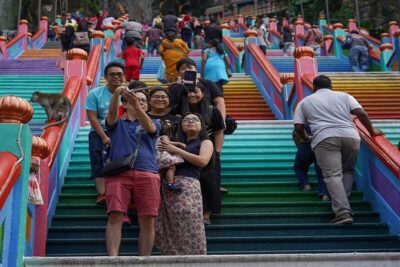
Private Tour Kuala Lumpur with Petronas Twin Towers Observation Deck & Batu Cave
Read our review →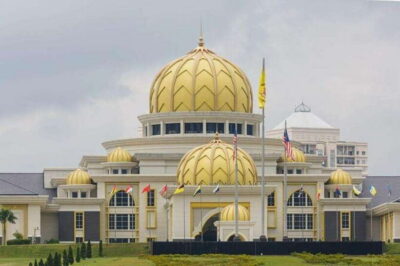
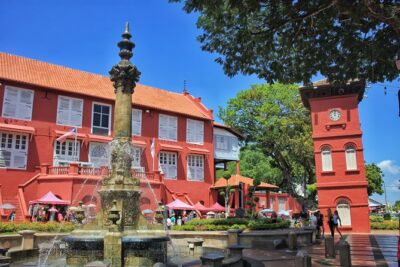
Historical Malacca Day Tour from Kuala Lumpur (Private Tour)
Read our review →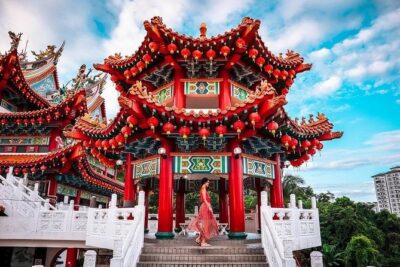
️ Kuala Lumpur Instagram Tour: Most Famous Spots (Private & All-Inclusive)
Read our review →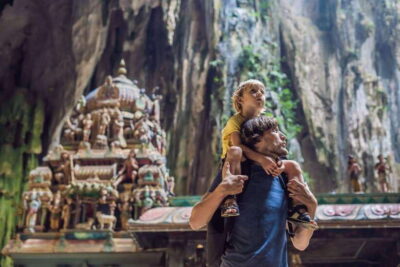
Private KL City Tour with Petronas Twin Towers & Batu Caves
Read our review →