
Reviewed · HISTORICAL TOURS
Half Day Cultural And Heritage Walking Tour in Kuala Lumpur
Kuala Lumpur’s story makes the most sense on foot, where a mosque, colonial square, Chinese temple, market, and Hindu shrine sit within the same compact old-city area. This four-hour walk with licensed guides such as Yen and Ben focuses on how Malay, Chinese, and Indian traditions shape modern Malaysia.
I like the clear cultural range and the promise of local shopping and eating advice rather than a quick parade of photo stops. I also like the small maximum group of 15 people, which gives you a better chance to ask questions. The main drawback is simple: four hours of walking in Kuala Lumpur can feel hot, and lunch, transport, and hotel pickup are not included.
In This Review
- Key points before you book
- Why this four-hour walk works in Kuala Lumpur
- Starting at Sultan Abdul Samad Jamek Mosque
- Merdeka Square and the city’s public story
- Seeing where Kuala Lumpur gets its name
- Central Market and Malaysia’s craft traditions
- Sin Sze Si Ya Temple and Chinese Taoist tradition
- Petaling Street and Chinatown
- Photographing the murals at Kwai Chai Hong
- Sri Maha Mariamman Temple and Kuala Lumpur’s Indian heritage
- What the guides add to the experience
- Group size, walking, and practical planning
- Who gets the best value for $39.03
- Should you book this Kuala Lumpur heritage walk?
- FAQ
- How long does the Kuala Lumpur cultural walking tour last?
- Where does the tour begin?
- Where does the activity end?
- Is lunch included?
- How many people can join the tour?
- Can I cancel for a full refund?
Key points before you book
- Three major cultures in one walk: Learn about Malay, Chinese, and Indian customs and religions through mosques, a Taoist temple, Chinatown, and a Hindu temple.
- Eight central Kuala Lumpur stops: The route covers Jamek Mosque, Merdeka Square, the River of Life, Central Market, Sin Sze Si Ya Temple, Chinatown, Kwai Chai Hong, and Sri Maha Mariamman Temple.
- Strong guide focus: Yen and Ben are named guides praised for clear explanations, local pride, and attention to detail.
- Useful local angle: Central Market and Petaling Street give you chances to see handicrafts, textiles, food, and everyday shopping areas.
- Good value for a short stay: At $39.03 per person, the tour brings together several major sights without charging separate admission for the listed stops.
- Plan for weather: The tour requires good weather, and free cancellation is available up to 24 hours before departure.
Why this four-hour walk works in Kuala Lumpur
Kuala Lumpur can feel scattered when you first arrive. The Petronas Twin Towers may dominate the city’s image, but the older center tells a different story. Here, religious buildings, civic squares, markets, and old neighborhoods sit close enough to connect in one walk.
That is the real value of this experience. You are not only looking at buildings. You are being shown how different communities helped shape Kuala Lumpur, and how Malay, Chinese, Indian, and colonial influences overlap in the city center.
The route lasts about four hours. Each named stop receives roughly 15 to 30 minutes, with walking time between them. That pace gives you enough time to hear the guide’s explanation and take photographs, but it does not leave much room for long shopping sessions or a leisurely meal.
The cost is $39.03 per person. Since the tour includes a licensed guide and sightseeing at eight locations, I consider that a fair price for a first look at central Kuala Lumpur. The value is strongest if you want structure and context. If you prefer wandering alone, stopping whenever you like, or spending an hour bargaining in Chinatown, the fixed route may feel restrictive.
More history walks around Kuala Lumpur:
- From Kuala Lumpur: Historical Melaka Day Tour with Lunch
★ 4.4 · 2,297 reviews - Historical Malacca Guided Day Tour (Shared Tour)
★ 5.0 · 2,172 reviews - Kuala Lumpur: Batu Caves & Historic Buildings Tour
★ 4.7 · 539 reviews
Starting at Sultan Abdul Samad Jamek Mosque
The walk begins at Masjid Jamek, also called Sultan Abdul Samad Jamek Mosque. The word Jamek refers to a gathering of people for worship, which explains the mosque’s name. It is one of Kuala Lumpur’s oldest mosques and was designed by A. B. Hubbock.
You have about 30 minutes here. That is enough time for the guide to explain the mosque’s role and point out architectural details before the walk moves on. This opening stop sets up the religious side of the tour and gives you an early reminder that Kuala Lumpur is not defined by one tradition.
The mosque is also a useful starting point because the rest of the route keeps comparing different faiths and communities. Later, you will see a Chinese Taoist temple and a Hindu temple. The contrast is not forced into a lecture. It comes through the places themselves.
Access conditions can vary at houses of worship, so follow the guide’s instructions on where you may walk and what you may photograph. The tour description confirms the stop, but it does not promise a particular interior visit.
Merdeka Square and the city’s public story
Next comes Dataran Merdeka, or Independence Square. This is one of the most spacious and photogenic parts of the route, with the Sultan Abdul Samad Building, the Textile Museum, and Malaysia’s tall flagpole nearby.
You get around 30 minutes here. I would use this time for wide photographs and for the guide’s historical explanation. The square is more than an open lawn. It connects public ceremony, colonial-era architecture, national identity, and the modern Malaysian state.
The Sultan Abdul Samad Building is the visual star, with its distinctive historic design. The nearby textile museum adds another layer, pointing toward Malaysia’s craft traditions. If British colonial architecture interests you, this may be one of your favorite sections. One of the named guides, Yen, received particular praise for explaining this architectural side of Kuala Lumpur.
Do not expect a museum visit or a long architectural study during the scheduled half hour. The stop works best as an introduction, especially if you are still learning how Kuala Lumpur’s older center fits together.
Seeing where Kuala Lumpur gets its name
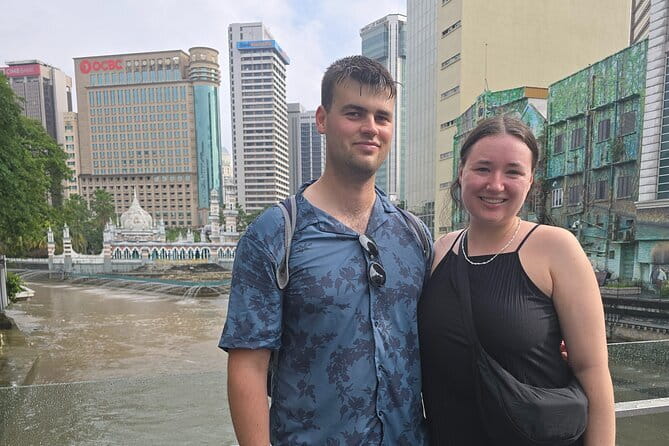
The River of Life takes only about 15 minutes, but it has a useful place in the route. This is where you can photograph the meeting point associated with the name Kuala Lumpur, which refers to a muddy confluence.
The stop is short, so think of it as a focused photo and orientation break rather than a full riverside visit. The guide can connect the waterway to the city’s beginnings, helping you understand why this particular area became important.
This is also a good moment to appreciate the route’s variety. You have moved from a mosque to a national square and then to the waterways tied to Kuala Lumpur’s name. Each stop is brief, but together they build a basic map of the city’s past.
More walking tours in Kuala Lumpur:
- Kuala Lumpur Local Street Food Private Walking Tour by Night
★ 4.5 · 224 reviews - Kuala Lumpur: Nightlife Walking Tour with Local Guide
★ 5.0 · 33 reviews - Kuala Lumpur InfoFun Walking Tour Experience
★ 5.0 · 24 reviews - Kuala Lumpur Heritage Walk
★ 4.5 · 23 reviews
Central Market and Malaysia’s craft traditions
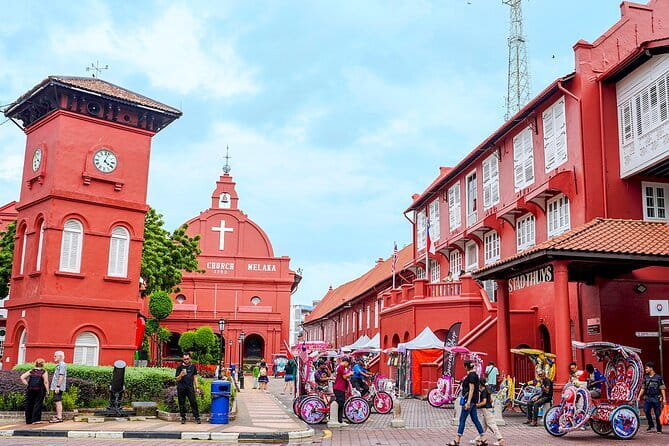
Pasar Seni, better known as Central Market, was once a wet market. Today it is a center for Malaysian culture, art, and craft. The scheduled visit lasts around 30 minutes.
This is one of the more useful stops for shoppers. You might find local handicrafts such as batik, songket, and Labu Sayong, along with other Malaysian-made items. The tour’s local focus is especially helpful here because a guide can give you context for what you are seeing instead of leaving you to sort through souvenirs without any background.
I like the way Central Market changes the pace of the walk. Religious buildings and civic monuments ask you to look upward and listen. A market invites you to look closely at materials, patterns, and objects that connect to everyday culture.
Thirty minutes is enough for a look around, but not enough for careful shopping. If you find something worth buying, you may need to return on your own after the tour. Lunch is also not included, so Central Market or Chinatown could be useful places to eat later, but the scheduled tour itself is not a food tour.
Sin Sze Si Ya Temple and Chinese Taoist tradition
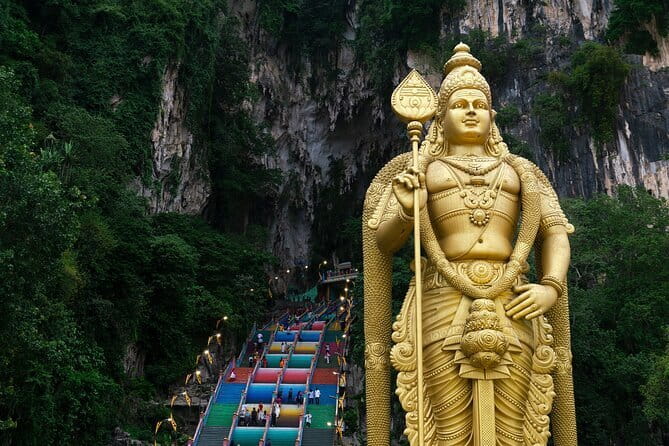
Sin Sze Si Ya Temple is described as Kuala Lumpur’s oldest Chinese temple. It was built by Yap Ah Loy, a founder of Kuala Lumpur, and preserves traditional Chinese Taoist practices.
You have another 30-minute stop here. This is where the tour moves from broad cultural labels to a specific place of worship with a direct link to the city’s early development. The guide’s role matters most at a site like this, since the symbols and practices may not be obvious if you are seeing them for the first time.
Take your time with the details you are shown, but keep in mind that this is an active religious site, not simply a historic display. Quiet attention and respect are more useful than rushing around with a camera.
The temple also helps explain the importance of Kuala Lumpur’s Chinese community. Its connection to Yap Ah Loy links faith, leadership, and the growth of the city in one stop. Ben is particularly well suited to this section based on the way he is described as explaining the temples and different areas of Kuala Lumpur in detail.
Petaling Street and Chinatown
Chinatown, known locally as Petaling Street, receives about 30 minutes. This is the route’s strongest stop for street-level city life, shopping, and food.
You may find textiles, electronic goods, and traditional Chinese food here. The area is practical and commercial, not a preserved museum quarter. That is part of its appeal. You see a neighborhood where shopping, eating, and local identity meet.
The time limit is the main thing to watch. Thirty minutes gives you an introduction, but it will pass quickly if you want to browse stalls or compare prices. The tour’s purpose is to explain the area and show you where it fits into Kuala Lumpur’s cultural mix. It is not designed for a full shopping expedition.
Chinatown was a highlight for one of the most enthusiastic comments about the walk, and I can see why. It brings together food, trade, Chinese heritage, and the feel of an active city district. You should save serious purchases and a longer meal for after the walk, unless the guide’s timing allows otherwise.
Photographing the murals at Kwai Chai Hong
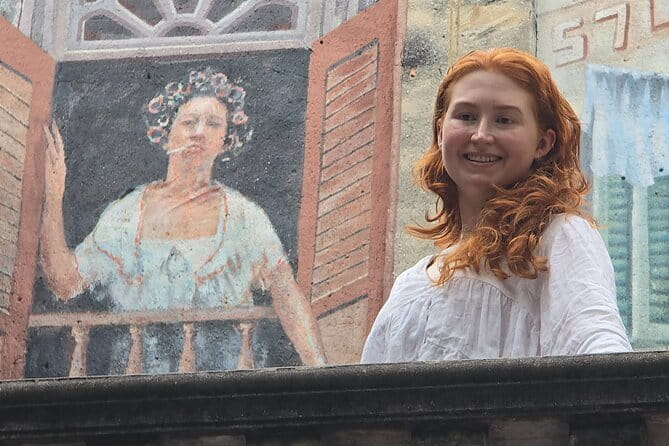
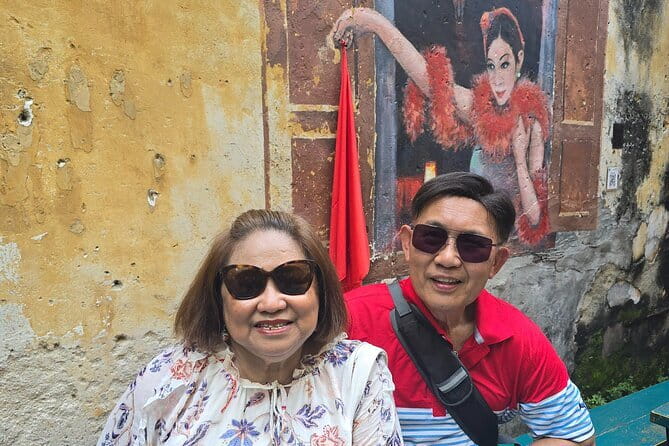
Kwai Chai Hong, or Little Demon Street, is a short 15-minute stop with a clear focus: photographs and murals. The painted scenes show aspects of traditional local Chinese life.
This is a small but smart addition to the route. After the temple and Chinatown, the murals give you a visual way to think about Chinese community life. They also provide a different kind of photo backdrop from the formal buildings earlier in the morning or afternoon.
Fifteen minutes should be enough to see the murals and take pictures. It is not enough for a slow art visit, and the stop may appeal less if you are not interested in photography. Still, the compact visit keeps the walk moving and adds variety.
Sri Maha Mariamman Temple and Kuala Lumpur’s Indian heritage
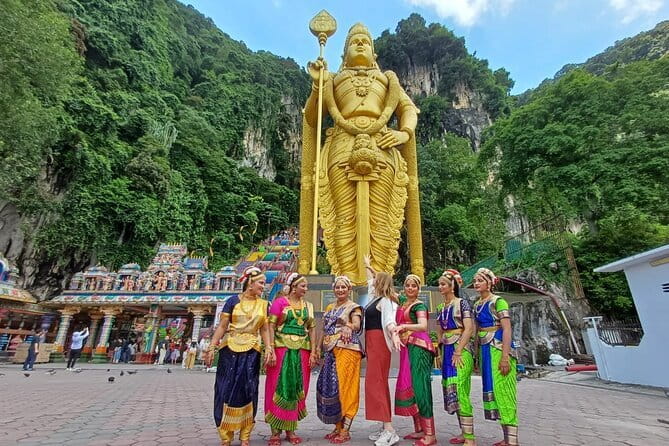
The final named stop is Sri Maha Mariamman Temple, a major Hindu place of worship in Kuala Lumpur. The visit lasts about 30 minutes.
This is a fitting end to the cultural portion of the walk. You have already seen a mosque and a Taoist temple, and now you encounter an important Hindu temple. The building is both a functioning place of worship and an eye-catching cultural landmark, which makes it easy to remember.
The temple gives the guide another chance to explain how Indian traditions form part of Kuala Lumpur’s wider identity. The route does not treat Malay, Chinese, and Indian culture as separate tourist displays. Instead, it places them in the same central area and lets you see how close they are geographically.
As with the mosque and Taoist temple, treat the site as a place of worship first. The supplied information does not promise a particular ceremony or interior access, so your experience will depend on the conditions on the day and the guide’s instructions.
What the guides add to the experience
The tour includes a licensed guide, and the guide may be Yen or Ben. The descriptions of both point to the same strength: clear explanations delivered with care.
Yen is described as attentive, pleasant, and especially strong on Kuala Lumpur’s British colonial architecture. Ben is described as thorough when explaining temples and different parts of the city. Another account presents him as proud of Malaysia and eager to connect historic details with current culture.
That matters because the route contains several places you could visit alone. You can photograph Merdeka Square or walk through Central Market without a guide. What you cannot easily get on your own is a clear explanation of why the mosque, square, market, temple, and Chinatown belong in the same story.
The tour provider’s stated aim is to show you where locals shop and eat. Since lunch is not included, treat that as local orientation rather than a promised meal. Ask the guide for suggestions during the walk, then decide where to return afterward.
Group size, walking, and practical planning
The maximum group size is 15 people. That is not a private tour, but it is small enough to keep the guide’s commentary more personal than a large coach outing. It also makes it easier to stay together through busy streets and market areas.
The meeting point is Masjid Jamek in Kuala Lumpur City Centre. The activity ends back at the meeting point, so you do not need to arrange a separate return transfer. Hotel pickup and drop-off are not included, and you should plan your own way to and from Masjid Jamek.
The tour lasts about four hours and requires good weather. Kuala Lumpur’s heat and rain can affect your comfort, so wear practical walking shoes and bring what you normally need for a warm outdoor outing. The official details confirm that most people can participate, service animals are allowed, and the route is near public transportation.
A mobile ticket is provided, which keeps the booking information on your phone. Confirmation arrives at booking. If the weather forces cancellation, you will be offered another date or a full refund.
Free cancellation applies when you cancel at least 24 hours before the start time. Changes or cancellations inside that window are not accepted for a refund, so check your plans before the cutoff.
Who gets the best value for $39.03
I would recommend this walk to a first-time Kuala Lumpur visitor who wants a clear introduction without spending a full day on sightseeing. The mix of religious sites, architecture, public history, shopping, and murals gives you a useful base for exploring more on your own.
It also suits you if you enjoy asking questions. The guide-led format is the reason to pay for the tour. If you only want photographs, you can reach several of these places independently for less.
The price makes sense because eight central stops are linked by commentary, and the listed visits do not charge separate admission. You are paying mainly for the guide, the route design, and the time saved in working out how the old center fits together.
I would be more cautious if you dislike walking, need a long lunch break, or want extended time at one site. The route covers a lot in four hours. Its strength is range, not depth at every stop.
Should you book this Kuala Lumpur heritage walk?
Book it if you want to understand the city through its Malay, Chinese, and Indian traditions, and if you value a guide who can connect architecture, faith, food, and daily life. Yen and Ben bring different strengths, with Yen especially strong on colonial buildings and Ben particularly effective around temples and local culture.
Skip it if your priority is the Petronas Towers, private transport, or a relaxed food tour. Those are not the focus here.
For most first visits, I think this is a sensible half-day introduction. Start at Masjid Jamek, listen closely through the religious and historic stops, then return later to Central Market or Chinatown for shopping and lunch. That approach gives you both the guide’s context and the free time the schedule cannot provide.
FAQ
How long does the Kuala Lumpur cultural walking tour last?
The tour lasts approximately four hours.
Where does the tour begin?
It begins at Masjid Jamek, Kuala Lumpur City Centre, 50050 Kuala Lumpur, Federal Territory of Kuala Lumpur, Malaysia.
Where does the activity end?
The activity ends back at the meeting point.
Is lunch included?
No. Lunch is not included in the tour price.
How many people can join the tour?
The tour has a maximum group size of 15 travelers.
Can I cancel for a full refund?
Yes. You can cancel for a full refund if you do so at least 24 hours before the experience start time. If poor weather causes the cancellation, you will be offered another date or a full refund.
More tours in Kuala Lumpur we've reviewed
- Batu Caves & Putrajaya Highlights: Landmarks & Botanical Garden★ 4.5 · 3 reviews
- AVANI Sepang Goldcoast Resort Hotel TO Kuala Lumpur Hotel Door to Door Transfer★ 4.5 · 3 reviews
- KL Cruise Excursions from Port Klang for KL City Tour★ 4.5 · 3 reviews
- Fireflies & Silver Leaf monkey Tour With Free Batu Caves Temple★ 5.0 · 3 reviews
- Private Kuala Lumpur City Tour with KL Tower & Batu Caves★ 5.0 · 3 reviews
- Exclusive Malacca Private Tour★ 5.0 · 3 reviews
- Fireflies and Kuala Selangor Tour Including Dinner★ 3.5 · 3 reviews
- Private Batu Caves & Petronas Twin Tower Tickets With Lunch *26*★ 5.0 · 3 reviews
Historical Tours, compared.
Historical Malacca Guided Day Tour (Shared Tour)
Read our review →
Historical Malacca Day Tour from Kuala Lumpur (Private Tour)
Read our review →
Private Half-day Batu Caves and Cultural Tour Kuala Lumpur *2026*
Read our review →
Malacca Historical Private Tour With Personal Chauffeur
Read our review →
Private Half-Day Temples and Cultural Tour in Kuala Lumpur
Read our review →Browse the lists this tour appears in